All Categories
Featured
Table of Contents
The SBA does not lend directly. Owners apply through an SBA-approved lender, who underwrites the loan based on its requirements and SBA standards.
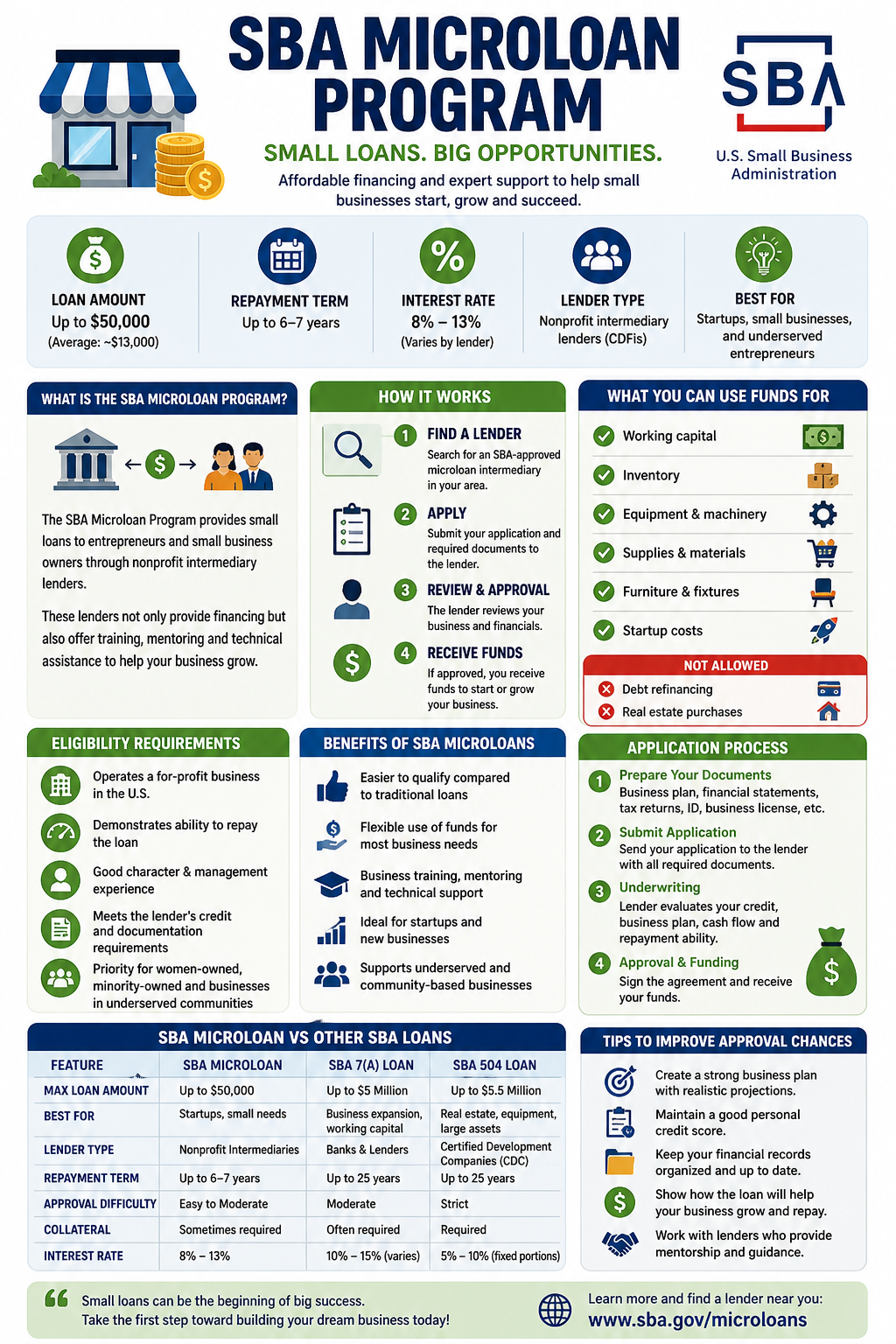
Using a lender with a recognized SBA department, like a credit union with industrial lending sta, can signicantly improve the process The scale of SBA loaning reects how extensively organizations throughout the nation rely on the program. That volume was driven in part by strong growth in the 7(a) program's tiniest loan tier, those under $150,000, reecting need from early-stage and smaller sized businesses that might otherwise have a hard time to access standard nancing.
Small business owners frequently rst consider big national banks for loans due to their name acknowledgment and branch presence., based on the 2025 Small Service Credit Survey, found that candidates who sought nancing at little banks were more likely to be totally approved at 57% than those who sought nancing from any other type of loan provider.
By contrast, 60% of borrowers who acquired nancing through online loan providers reported that actual borrowing costs were higher than expected, while just 32% of large bank borrowers and 37% of little bank borrowers said the very same. Smaller sized, relationship-based institutions consistently provide better outcomes and less unwanted surprises on expense. As not-for-prot, member-owned institutions, credit unions oer business debtors more competitive loan pricing, exible underwriting, and a deeper understanding of the member's organization.
Navigating Business Funding Criteria for 2026Post-closing, the relationship component persists, leading to higher debtor complete satisfaction than with online or big lenders, according to a Federal Reserve study. Access to a dedicated commercial financing specialist who evaluates the application and maintains connection adds worth not fully captured by aggregate information. For customers, this worth extends further, as credit union loans are normally exempt from intangible tax, offering a significant decrease in closing costs compared to other lenders.
Lowering Retail Operating Expenses to Improve ROIA Step-By-Step 2026 SME Loan Approval Guide
, candidates at little banks were completely approved at a rate of57%, outperforming big banks and online lenders. Debtors at little organizations were far less most likely to come across higher-than-expected loaning costs compared to online ntech loan providers, where 60% reported expenses above anticipation.
Credit score is one of the rst things a loan provider evaluates when examining a business loan application, and one of the most common factors applications get rejected. For SBA loans specically, individual credit ratings normally require to be 650 or above for standard qualication, with stronger applications showing 680 or greater, per SCORE's assistance on personal credit and service loan approval.
How SME Automation Reduces Overhead Expenses in 2026
A denial from one loan provider does not indicate nancing is impossible. Dealing with a lender that uses a relationship-based underwriting approach, instead of rigorous automated score thresholds, permits a business owner's full nancial picture to be evaluated. Business credit rating, kept by bureaus like Dun & Bradstreet, Experian Organization, and Equifax Company, are different from individual ratings.
Younger companies frequently lack company credit rating, triggering loan providers to rely more on individual credit throughout underwriting. Developing a service credit prole early, even with small vendor accounts or an organization charge card, signicantly enhances future loan applications. For SBA 7(a) loans, the credit picture consists of one extra layer. Until recently, lenders were required to prescreen smaller sized SBA loan applications using the FICO Small Organization Scoring Service rating, understood as the SBSS.
Company owner pursuing SBA nancing need to ask their loan provider straight which scoring designs they apply and what thresholds they use internally. According to a LendingTree analysis of Federal Reserve lending data, borrower nancials were the primary reason pointed out for service loan denials in Q1 2025, with 68.4% of businesses noting this as the cause, followed by credit rating at 21.5% and lack of collateral at 5.7%.

Latest Posts
Modern Team Scheduling to Higher Efficiency
Essential SME Accounting Tips for Boost Capital
Combining Automation and Boost Store Fiscal Sustainability