All Categories
Featured
Table of Contents
Regularly fixing up bank and credit card declarations ensures that monetary records accurately reflect real transactions. This process involves comparing bookkeeping records with bank statements to determine disparities, such as missing out on payments or unapproved charges. Reconciliation helps avoid mistakes, identify fraud, and guarantee that monetary reports are based on accurate data.
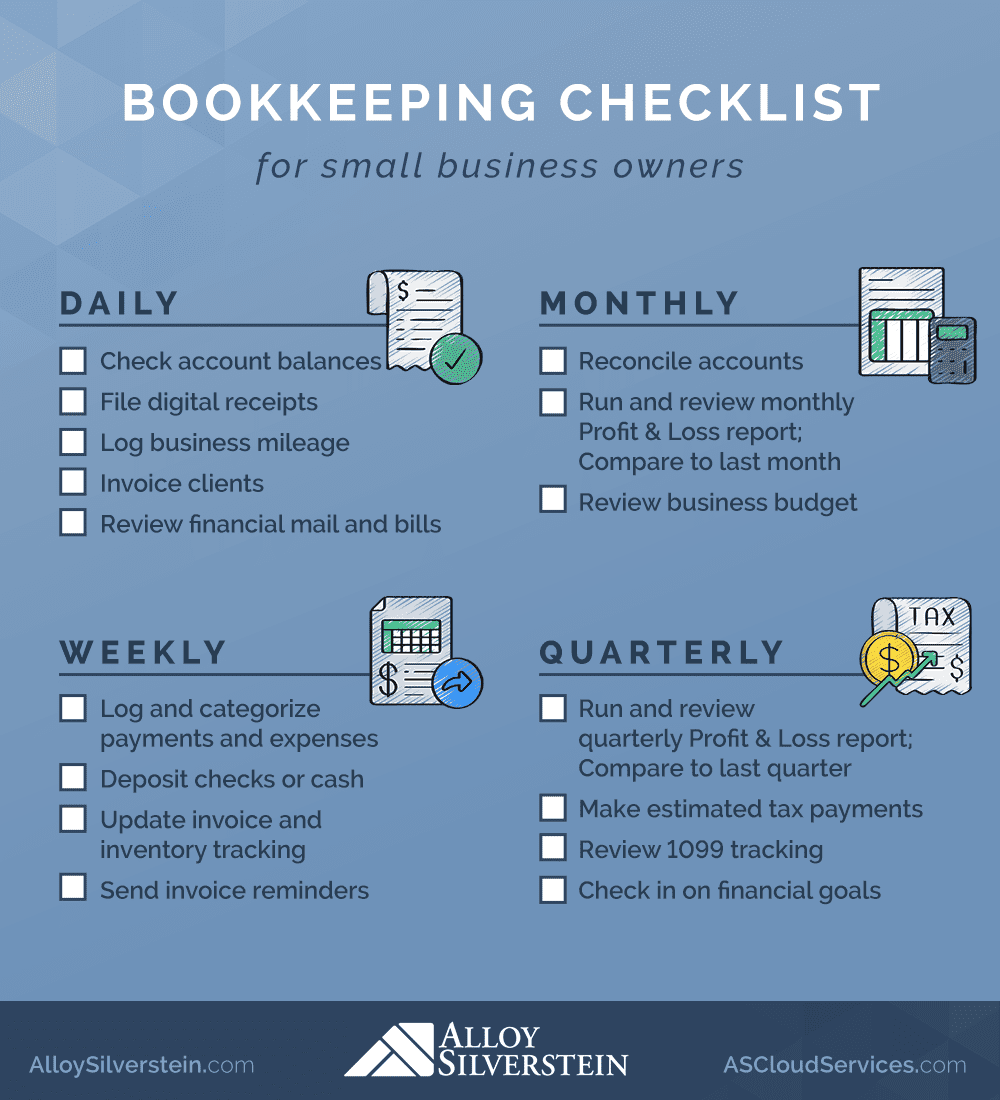
Small company owners need to track hours worked, represent benefits, and adhere to labor laws and tax regulations. Correct payroll management not just makes sure employees are paid properly and on time however also assists organizations avoid legal issues and charges related to tax withholding mistakes. Financial reports supply business owners with insights into their business's monetary health and performance.
Without routine monetary reporting, small companies might have a hard time to comprehend their financial position and make informed tactical options. The initial step in handling your own bookkeeping is developing a structured system for recording financial deals. This involves setting up categories for earnings and expenditures, organizing invoices and billings, and keeping precise records of all business deals.
Small business owners should choose between cash and accrual accounting to track their financial resources. Cash-basis accounting records earnings when payments are gotten and expenses when they are paid, making it simple and appropriate for small companies with straightforward deals. Despite its simplicity, cash-basis accounting does not offer an accurate monetary image, considering that it does not represent exceptional billings or overdue expenses.
The accrual method, on the other hand, records earnings when a sale is made (even if payment hasn't been received) and expenses when they are incurred (despite when they are paid), supplying a more accurate long-term monetary image. However, it needs more accounting effort and might result in capital problems if not closely kept an eye on.
Essential Finance Tips for SME BusinessesBetter Staff Scheduling for SME Owners
Accounting software application, such as Finaloop, automates many accounting tasks, minimizes errors, and generates financial reports with ease. Brand owners must weigh aspects like company size, deal volume, and the requirement for automation when deciding in between spreadsheets and devoted accounting software application. Cloud-based bookkeeping services permit company owner to automate financial jobs such as transaction classification, invoicing, and bank reconciliations.
Cloud accounting likewise provides updated financial data, making it easier to track business performance in real-time and eliminated the requirement for bookkeepers. While DIY bookkeeping works well for lots of small organization owners, there comes a time when contracting out might be more useful. If accounting jobs end up being too complicated, consume too much time, or result in regular mistakes, employing an expert bookkeeper (or utilizing software application particularly customized towards your business, like Finaloop) can help.
Outsourcing bookkeeping allows entrepreneur to focus on core operations while making sure financial records remain accurate and certified. When trying to find out which bookkeeping software is best for little businesses in 2025, it is essential to step out of the box and search for small company accounting software aside from quickbooks.
Meeting Commercial Loan Criteria for 2026
Unlike the other options, Finaloop sticks out as both accounting software and a bookkeeping service. It offers an ecommerce-dedicated stock management option constructed into accounting software, a prebuilt ecommerce-focused chart of accounts, receivables and payable management, automated deals classification, automated reconciliation, and tax prepared books. The platform flawlessly integrates with online shop platforms like Shopify or Woocommerce and marketplaces like Amazon and Walmart.
Preparing for Your Business Loan Requirements in 2026Finaloop integrates with your payment processors, checking account, and online shops for three-way reconciliation orders to payouts to company savings account and offers accrual versus cash-basis versatility. Additionally, it offers a group of internal accountants and 24/7 client assistance. Finaloop's combination of automation and professional accounting services makes it a time-saving and affordable option for company owner who want precise, hassle-free financial management.
It supplies multi-currency assistance, stock management, and automated transaction matching, links to all significant accounts, and tracks charges, taxes, and profits across sales channels to make it possible for historic reports and forecasting. QuickBooks is software-only and not a service, implying users need to have some bookkeeping understanding to get the most out of it (or work with a bookkeeper).
The platform likewise has a high knowing curve for newbies, and its chart of accounts is not enhanced for ecommerce accounting. Xero stands out with over 800 integrations with third-party applications. The platform provides stock management, double-entry accounting, bank reconciliation, cost tracking with classification rules, a billings and quotes generator, and a customizable dashboard.
Automating Staff Rostering for Productivity
Reports are simple to view and personalize, making it a great alternative for mid to large-size organizations. Like QuickBooks, Xero is accounting software just, needing Do it yourself accounting by you or an accountant.

Latest Posts
Modern Team Scheduling to Higher Efficiency
Essential SME Accounting Tips for Boost Capital
Combining Automation and Boost Store Fiscal Sustainability